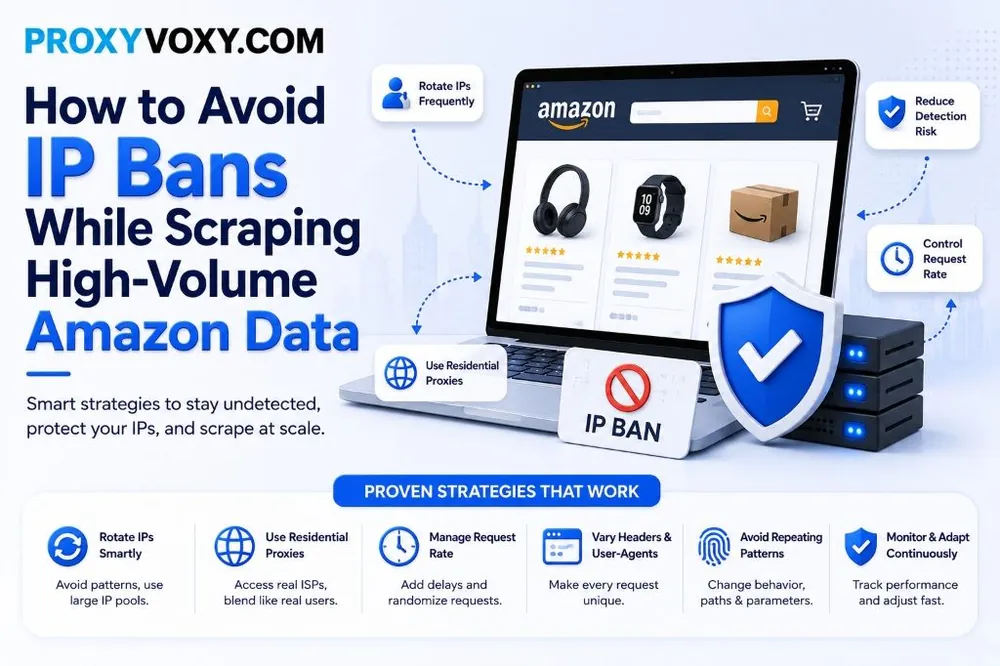
Introduction: The Web Scraping Battleground in 2026
Modern web data extraction has shifted from simple curl requests to an intensive technological arms race. Target platforms deploy sophisticated behavioral classifiers, machine learning detection shields, and TLS fingerprint matching engines. In this landscape, basic datacenter server IPs are flagged and blocked immediately. To bypass these barriers, automation engineers must utilize legitimate residential proxies that replicate authentic domestic homeowner traffic.
But what makes residential proxies so highly trusted compared to datacenter alternatives? How do they route data packets across consumer ISP networks, and how can developer teams implement them to scale extraction pipelines? In this deep-dive guide, we break down the architecture, networking protocols, security considerations, and enterprise use cases of modern residential proxy networks.
What is a Residential Proxy?
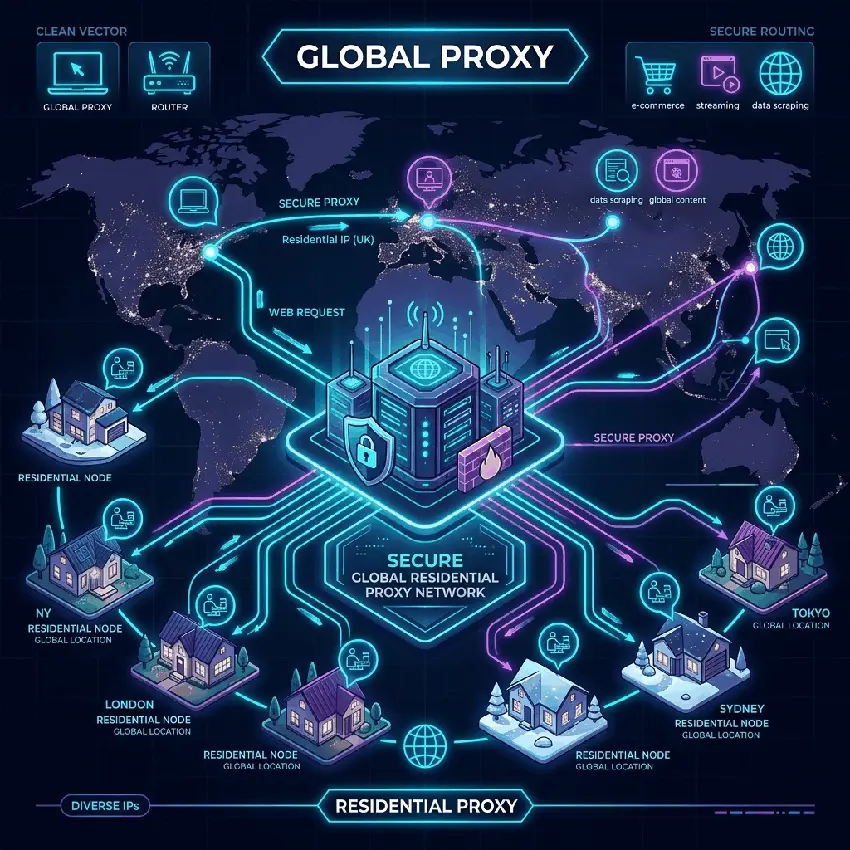
A residential proxy is an intermediary gateway server that routes client requests through physical consumer devices connected to home broadband networks. Unlike datacenter proxies—which are hosted in commercial servers (like AWS or DigitalOcean) and carry obvious server registries—residential proxies inherit genuine consumer IP addresses leased from major Internet Service Providers (ISPs like Comcast, Verizon, Charter, and BT).
Every residential IP address is registered under an Autonomous System Number (ASN) classified as a consumer network. When your automated scraper routes queries through a residential proxy, target firewalls log the incoming request as originating from an organic household consumer browsing the web. This clean reputation ensures a near-zero block rate on heavily protected platforms.
How Do Residential Proxies Work?
Understanding the network-level packet transit cycle is critical for system architects. When a client script submits a query over a rotating ProxyVoxy residential proxy pool, the request undergoes a multi-step routing process:
- Client Connection Init: Your automated crawling script initiates an outbound connection, directing the request to the proxy gateway server (e.g.,
proxy.proxyvoxy.com:7777) and appending authorization credentials. - Gateway Authentication & Selection: The gateway server validates your credentials, checks your active bandwidth balance, and parses any location-targeting or session-binding flags in the username string.
- Residential Node Tunneling: The gateway forwards the request to an active peer-to-peer home node matching your targeting parameters (e.g., a Comcast router in Boston, MA). The node acts as a transparent relay.
- Destination Query Execution: The domestic home node submits the web query to the target platform (e.g., Google or Amazon). The target platform processes the query and returns the HTML payload to the residential node.
- Payload Delivery: The residential node tunnels the response back through the proxy gateway to your scraper client script, completing the data extraction loop.
Because the target web server only sees the final hop—the domestic home residential IP—the request inherits a perfect consumer reputation score, bypassing rate-limiting and anti-bot challenge screens.
Key Architectural Profiles: Rotating vs. Sticky Sessions
Residential proxy networks provide two primary connection management configurations:
1. Rotating Residential Proxies (Request-Level Rotation)
Rotating proxies allocate a fresh residential IP address on every individual HTTP request. On thread query 1, your scraper uses a Verizon node in New York; on query 2, it uses an AT&T node in Chicago. This request-level cycle is ideal for high-volume data scraping pipelines (such as price matching, search engine harvesting, and directory indexing) because it distributes requests across thousands of unique nodes, making rate-limiting impossible.
2. Sticky Sessions (Session-Bound Proxies)
For automation tasks requiring user login, shopping cart additions, or multi-step form completion, changing the IP address mid-session triggers security alerts, resulting in immediate session termination. To prevent this, developer teams configure sticky sessions.
Sticky sessions lock your thread connection to the same active homeowner node for a designated duration (typically up to 30 minutes). In ProxyVoxy, sticky sessions are configured by appending a custom session identifier suffix to your username string (e.g., username-session-abcd1234). This session anchor ensures absolute continuity for multi-step transaction bots.
Critical Networking Protocols: SOCKS5 vs. HTTP
The communication protocol you choose to establish connections defines the speed, capability, and anonymity of your scraper tools.
1. HTTP/HTTPS Proxies
HTTP proxies are built to handle standard web page text transfers. While widely supported and easy to configure, HTTP proxies parse the application data and can inject proxy-identifying headers (such as Via, Forwarded, or X-Forwarded-For) that tell target servers a proxy is being utilized. This leaks your real crawler server details, triggering blocks.
2. SOCKS5 Sockets (The Ultimate Developer Standard)
SOCKS5 operates at OSI Model Layer 5 (Session Layer), transferring raw TCP or UDP packets blindly without parsing or modifying the application payload. Because SOCKS5 does not interpret the HTTP headers, it never appends identifiable proxy headers, ensuring absolute anonymity.
Additionally, SOCKS5 supports remote DNS resolution. By routing DNS queries through the SOCKS5 proxy, you prevent "DNS leaks," ensuring target platforms cannot log the local DNS requests of your hosting server. SOCKS5 is the gold standard for bypassing enterprise security setups like Akamai or Datadome.
Primary Enterprise Use Cases
Corporations utilize premium residential proxies across a variety of business intelligence and automation pipelines:
- E-Commerce Pricing Intelligence: Retailers sweep thousands of competitor product listings daily. Utilizing geofenced residential IPs allows pricing engines to extract accurate regional prices and catalog listings without triggering rate-limiting bans.
- Ad Verification Audits: Digital advertisers deploy static ISP and residential proxies to audit programmatic ad campaigns. By simulating domestic searchers globally, compliance teams verify ads render correctly, detecting ad fraud and fraudulent redirect loops.
- Brand and IP Protection: Corporations scan e-commerce marketplaces and social networks to identify trademark violations and counterfeit sales. Because bad actors block search traffic from corporate subnets, inspectors use residential IPs to inspect listings without detection.
- Sneaker copping and retail drops: Copping limited-release sneakers requires bots to execute checkouts in milliseconds. Static ISP and rotating residential networks bypass checkout anti-bot guards, enabling high checkout success rates.
Ethical IP Sourcing and Legal Compliance
With great power comes great responsibility. To maintain connection integrity and legal compliance, residential proxy pools must be sourced ethically. Legitimate providers like ProxyVoxy construct their pools through developer SDK integration partnerships, ensuring home users explicitly consent to sharing bandwidth in exchange for rewards.
Using ethically sourced proxy pools protects corporate scrapers from legal liability and guarantees excellent IP cleanliness scores, as ethical pools are free from rogue botnets or hacked connection blocks.
Summary of Key Technical Benchmarks
When deploying proxy infrastructure, system architects must evaluate providers on three critical telemetry baselines:
- Connection Latency Ping SLA: The network transit delay on the proxy gateway. Fast response rates (sub-40ms) are critical for high-volume scrapers.
- Active pool size variety: The quantity of unique consumer IPs. Larger pools (90M+ nodes) prevent IP address exhaustion and blocks.
- Billing flexibility: Developer-friendly networks should offer metered pay-as-you-go bandwidth starting at competitive rates ($2.00/GB) with zero contractual monthly lock-ins.
FAQ: Frequently Asked Questions
What is the difference between a datacenter and a residential proxy?
Datacenter proxies consist of static server IP addresses hosted on cloud networks (like AWS). They are fast and cheap but carry high risk because their ASN identifies them as automated servers. Residential proxies route queries through real consumer home internet connections, inheriting high trust scores that bypass anti-bot shields.
How do I rotate residential proxies in python requests?
Proxy rotation is handled automatically by the provider's gateway. By configuring your python script to target the ProxyVoxy connection gateway (proxy.proxyvoxy.com:7777), every outbound HTTP request receives a fresh, randomized residential IP address.
Is it legal to scrape data with residential proxies?
Yes, scraping public information (such as product pricing, directories, and catalog reviews) is legal under US judicial precedents (e.g., hiQ Labs v. LinkedIn). However, scrapers must comply with local privacy rules (like GDPR) and avoid overloading target server systems.
Can I get banned while using a rotating residential proxy?
While individual residential IP nodes can get temporarily rate-limited, ProxyVoxy's massive pool of 90M+ nodes ensures your script can instantly cycle to a fresh, clean node, enabling your scraping pipeline to continue scaling without interruption.
Ready to Scale Your Scraping Pipelines?
Sign up with ProxyVoxy today to secure unlimited access to over 90M+ verified consumer residential IPs with native SOCKS5 support. No monthly contracts, pay-as-you-go starting at $2.00/GB.