The Landscape of Consumer Proxy Pools
In modern web automation, social account management, and high-frequency crawling pipelines, utilizing premium consumer IP addresses is essential to bypass rate-limiting and anti-bot firewalls. Because target platforms flag datacenter subnets instantly, developers rely on residential and mobile networks carrying genuine consumer identifiers.
However, residential and mobile proxy classes are built on fundamentally different network architectures, trust scoring systems, and billing structures. Understanding these technical discrepancies is critical to selecting the optimal connection protocol for your automation infrastructure.
Understanding Carrier-Grade NAT (CGNAT) and Mobile IP Trust
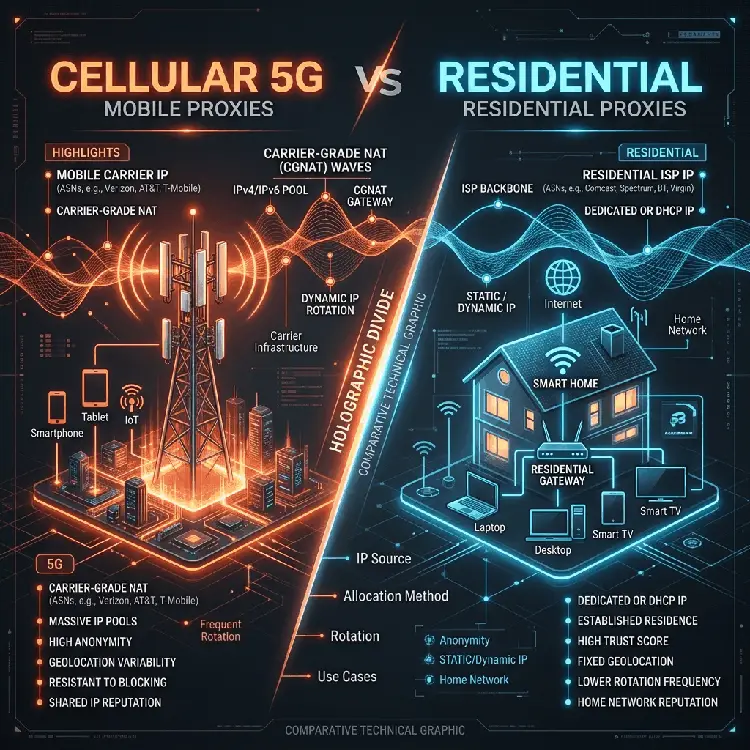
The most significant difference between mobile and residential proxies lies in their IP allocation architecture.
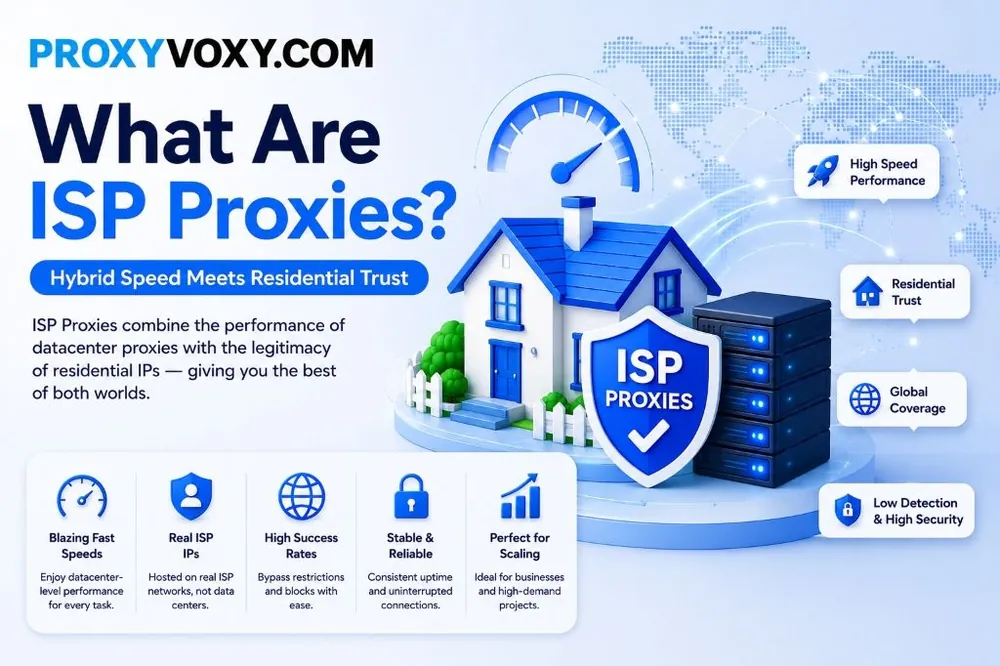
Residential proxies run on standard home broadband connections (DSL, fiber-to-the-home). Every home router is typically assigned a unique, dedicated public IPv4 address by their ISP. If a home connection exhibits aggressive scraping behavior, the target server blocks that specific IP.
Mobile proxies (4G/5G cellular) route traffic through cellular towers. Because there are billions of mobile devices worldwide but a limited supply of public IPv4 addresses, mobile carriers deploy a routing technique known as Carrier-Grade NAT (CGNAT). Under CGNAT, a cellular tower shares a single public IPv4 address among thousands of active mobile users simultaneously.
This shared CGNAT structure gives mobile proxies an extraordinary trust score. If a social network (such as Instagram or TikTok) blocks a mobile IP, it risks blocking thousands of real, innocent mobile users connected to that cellular tower. To avoid locking out actual customers, target platforms apply extremely lenient rate-limiting thresholds and near-zero block weights to mobile carrier ASNs (such as T-Mobile, Vodafone, or AT&T Wireless).
A Detailed Technical Comparison
The operational parameters of mobile and residential proxies differ across key areas:
- IP Address Rotations: Mobile proxies rotate IPs frequently due to cellular tower switching (handover) and carrier-managed DHCP resets. Residential IPs are relatively more stable, supporting longer-lived sticky sessions.
- Trust Reputation: Mobile proxies represent the highest connection trust available because of the shared CGNAT architecture. Residential proxies have excellent trust, but are still vulnerable to individual IP blacklisting.
- Cost & Billing Structures: Mobile bandwidth and dedicated 4G/5G dongles are expensive to operate, making mobile proxies costlier on a per-IP or per-GB basis. Residential proxy networks provide massive global pools (over 90 million nodes) at a highly affordable metered rate.
Choosing the Optimal Proxy Class for Your Scraper Pipeline
To optimize performance and budget, match your automation use cases to the correct proxy class:
When to choose Rotating Residential Proxies
Residential proxies represent the ideal tool for large-scale web scraping, e-commerce indexing, and search engine crawling. By leveraging ProxyVoxy's extensive pool of over 90 million homeowner IPs, developers can distribute millions of concurrent requests globally. Residential proxies offer excellent consumer reputation at a highly cost-effective metered rate, starting at just $2.00/GB.
When to choose Dedicated Mobile Proxies
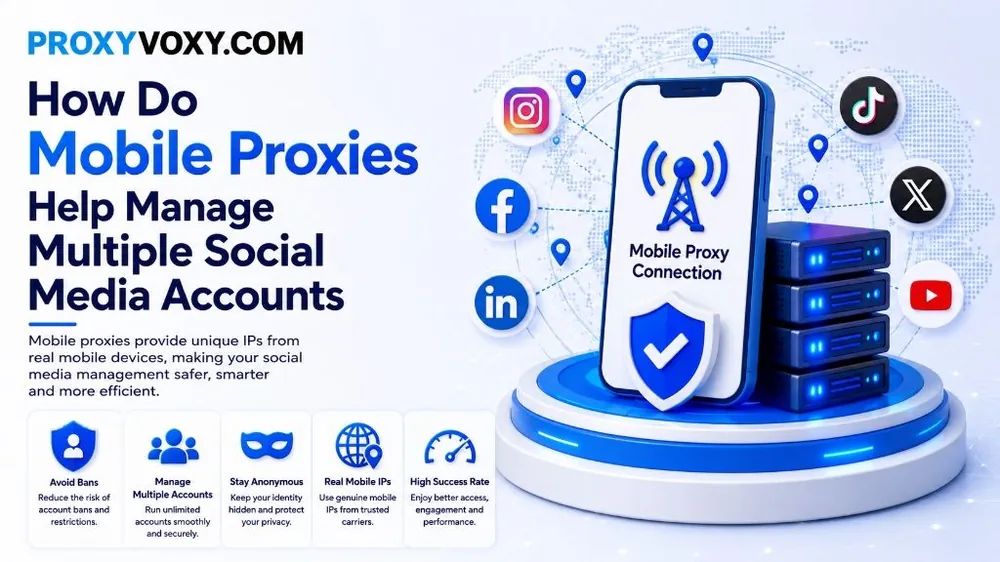
Mobile proxies are highly recommended for social account automation (managing multiple Instagram, TikTok, or Facebook accounts) and high-security app scraping. Because mobile apps expect organic user traffic from cellular networks, routing requests through mobile carrier ASNs avoids triggering security check flags, keeping your social accounts fully active.
Comparison Summary Matrix
The table below highlights the core performance differences between residential and mobile networks:
| Operational Metric | Rotating Residential | 4G/5G Mobile Proxies |
|---|---|---|
| IP Allocation Type | Dedicated domestic broadband (one IP per home) | Shared CGNAT (thousands of users per IP) |
| Block Risk Profile | Low (individual IP blocks occur) | Extremely Low (almost never blocked) |
| Global Pool Depth | Massive (90 Million+ global nodes) | Limited (cellular hardware restricted) |
| Average Pricing | Highly affordable ($2.00 / GB) | Expensive (due to cellular data overhead) |
FAQ: Mobile vs Residential Proxies
Why are mobile proxies almost impossible for websites to block?
Because mobile carriers deploy Carrier-Grade NAT (CGNAT), thousands of legitimate smartphone users share the same public IP address. If a website blocks that IP, it disconnects thousands of real consumers. To avoid this, websites maintain very lenient security rules for mobile IP pools.
Does a rotating residential proxy pools work for managing multiple Instagram profiles?
While residential proxies can work, mobile proxies represent the safest choice for social media automations. Social platforms are highly sensitive, and mobile connections inherit the highest trust score, allowing you to run account actions without triggering security check flags, keeping your social accounts fully active.
What is a CGNAT (Carrier-Grade NAT) gateway?
CGNAT is a cellular carrier network routing protocol that enables multiple devices to share a single public IPv4 address. This shared structure increases connection trust, making it highly effective at evading anti-bot firewall systems.
How does proxy location targeting work on mobile networks?
Location targeting on cellular connections is managed by mobile carrier routing centers. ProxyVoxy allows developers to target specific mobile carriers or geographic regions, routing cellular traffic through local mobile gateways to ensure accurate regional IP outputs.